
Water Leak Detection in Royse City
24/7 water leak detection in Royse City and surrounding areas. IICRC-certified, insurance billing accepted. Call (214) 304-0621.
Noticing a water bill that jumped without an obvious reason, a warm patch on the slab, or a musty smell that won’t go away even though you can’t find a drip? That combination usually points to a hidden leak, not a visible one, and finding it before it finds its way into your drywall or foundation is the whole point of water leak detection.
A leak you can see is a plumbing call. A leak you can’t see, behind a wall, under a slab, inside a ceiling cavity, is a detection problem, and it’s the kind of thing that quietly does damage for weeks before anyone notices the warped baseboard or the spike in the water bill.
What water leak detection actually involves
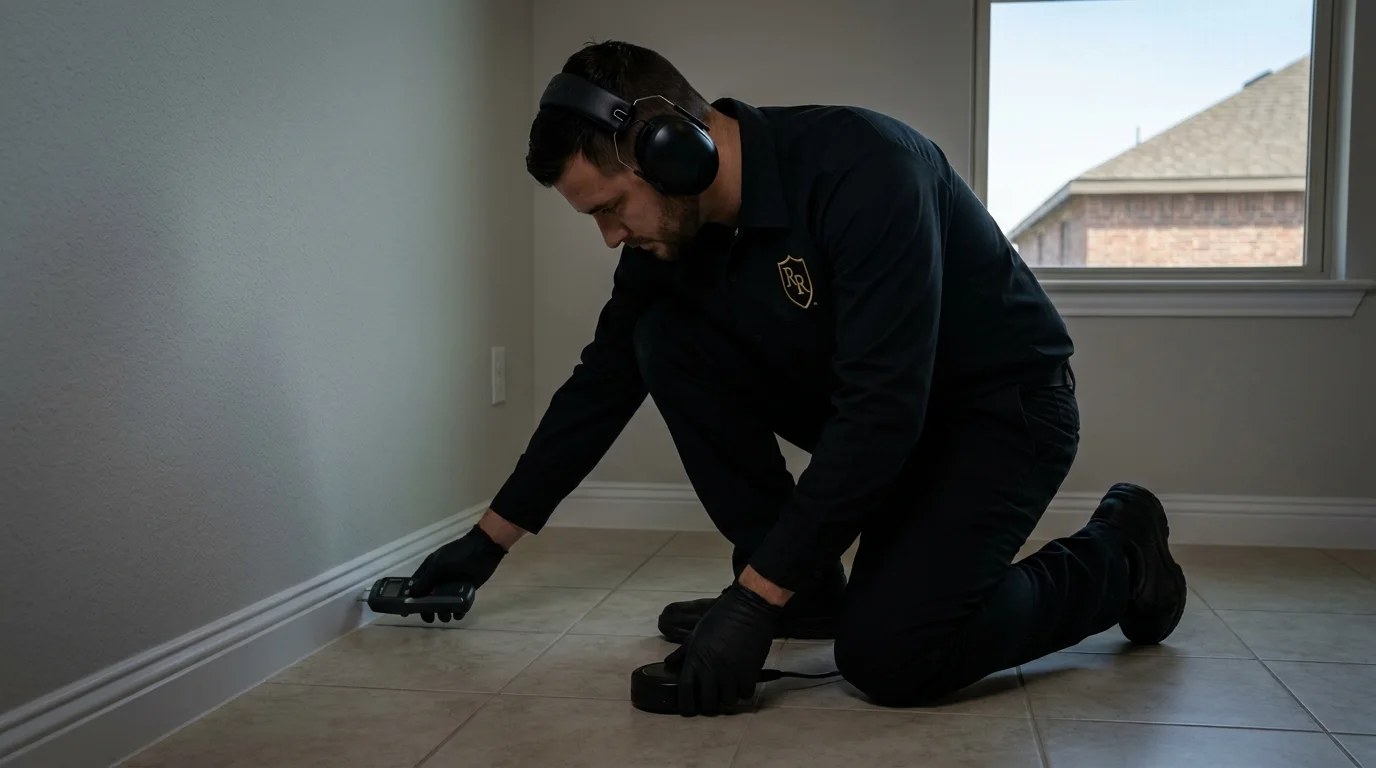
Leak detection is diagnostic work, not demolition. The goal is to find the exact source and path of water intrusion without tearing out more of the house than necessary. That means acoustic listening equipment that picks up the sound of water moving through pipe under pressure, thermal imaging cameras that reveal temperature differences where moisture is present behind a surface, and moisture meters that confirm what the thermal scan is showing. For leaks suspected in a concrete slab, which is common in North Texas home construction, that often means pressure testing the plumbing system and sometimes tracer gas to isolate which line is compromised. The process is methodical: rule out the obvious, narrow the search area, confirm with instruments, then mark the exact point before anyone opens a wall or cuts into flooring.
Our process
- Symptom review. We start with what you’ve noticed, water bill history, visible staining, smells, sounds of running water when fixtures are off, since those details point us toward supply lines, drain lines, or an appliance connection before equipment ever comes out.
- Non-invasive diagnostic scan. Acoustic listening devices and thermal imaging cover the suspect areas first. This is how we find a leak in a wall or under flooring without guessing.
- Pressure and tracer gas testing for slab leaks. When the evidence points to a line running through or under the foundation, we isolate zones of the plumbing system and test under pressure to confirm which section is leaking.
- Pinpointing and marking. Once the leak is narrowed to a specific point, we confirm it with a secondary method before marking the exact location, so any access cut is small and targeted.
- Documentation and handoff. You get a written report with moisture readings, images, and the confirmed location, which goes to your plumber for repair and, if water has already reached framing or drywall, directly into a drying scope.
What separates a good leak detection response from a bad one
The most common mistake is skipping instrumentation and going straight to demolition, opening multiple sections of drywall or cutting large slab access points on a hunch. That adds cost and repair scope that often wasn’t necessary. A good diagnostic process narrows the search before any cutting happens.
The second mistake is stopping at “found the leak” without checking how far the water already traveled. Water moves along framing members, under subfloor, and into wall cavities well beyond the point of origin, so a thorough check includes moisture mapping of the surrounding structure, not just the leak source itself. Insurance adjusters reviewing a claim look for exactly this: dated moisture readings, photos of the affected area, and a clear explanation of how the leak was located, since that documentation is what supports coverage for the resulting damage, not just the plumbing repair.
What does water leak detection cost?
Costs vary depending on whether the leak is in an accessible wall, under a slab, or tied to an irrigation or exterior line, and every property is different enough that we provide a written scope before any diagnostic or repair work begins. Homeowners insurance typically covers the resulting water damage once a leak is found, such as drying and repair of affected drywall or flooring, but the plumbing repair itself and the detection service are usually treated as a maintenance cost rather than a covered loss. Industry-typical ranges for the Dallas-Fort Worth area generally fall into these bands:
| Scenario | Typical range |
|---|---|
| Basic moisture meter inspection, single area | $200 - $450 |
| Acoustic and thermal imaging scan, whole room | $350 - $750 |
| Slab leak detection with pressure testing | $500 - $1,200 |
| Leak detection on irrigation or exterior line | $300 - $700 |
| Whole-house moisture survey | $600 - $1,500 |
Seasonal & regional considerations
Royse City sits on clay-heavy soil that expands and contracts with Texas’s swing between summer drought and heavy spring rain, and that movement puts stress on both slab foundations and the plumbing running through them. Many homes in the area are slab-on-grade construction, which means a slab leak doesn’t show up as a puddle, it shows up as a warm spot on the floor or a gradual rise in the water bill. Winter freezes are less frequent here than farther north, but the occasional hard freeze can still crack an exposed or poorly insulated line, and that’s often when a small existing leak gets noticed for the first time.
Service area
We provide water leak detection service throughout Royse City and the surrounding communities, including Rockwall, Fate, Greenville, Wylie, and McLendon-Chisholm, as well as other nearby Rockwall and Hunt County areas.
If something about your water bill, your slab, or a wall that won’t stay dry doesn’t add up, schedule a leak detection visit and get the exact source confirmed before it turns into a bigger repair.
Frequently Asked Questions
Does homeowners insurance cover water leak detection?
How do you find a leak inside a wall without tearing it open?
What makes a slab leak harder to detect than a regular leak?
How long does a leak detection visit usually take?
What should I do while waiting for a leak detection appointment?
Can leak detection confirm mold risk before it becomes visible?
Looking for the best water-leak-detection company in Royse City?
Reign Restoration provides licensed and insured water-leak-detection in Royse City, TX and the surrounding area. Customers rate us 5.0 out of 5 stars across 27 Google reviews. We answer calls 24/7 — call (214) 304-0621 for immediate help.
Need water-leak-detection now?
We respond 24/7 across Royse City and surrounding TX cities.
Related Coverage
- Our Restoration Services
- Contact Reign Restoration
- Restoration Services in Allen
- Restoration Services in Caddo Mills
- Restoration Services in Dallas
- Restoration Services in Farmersville
- Restoration Services in Fate
- Restoration Services in Frisco
- Restoration Services in Garland
- Restoration Services in Greenville
- Restoration Services in Heath
- Restoration Services in Highland Park
- Restoration Services in Josephine
- Restoration Services in Lavon