
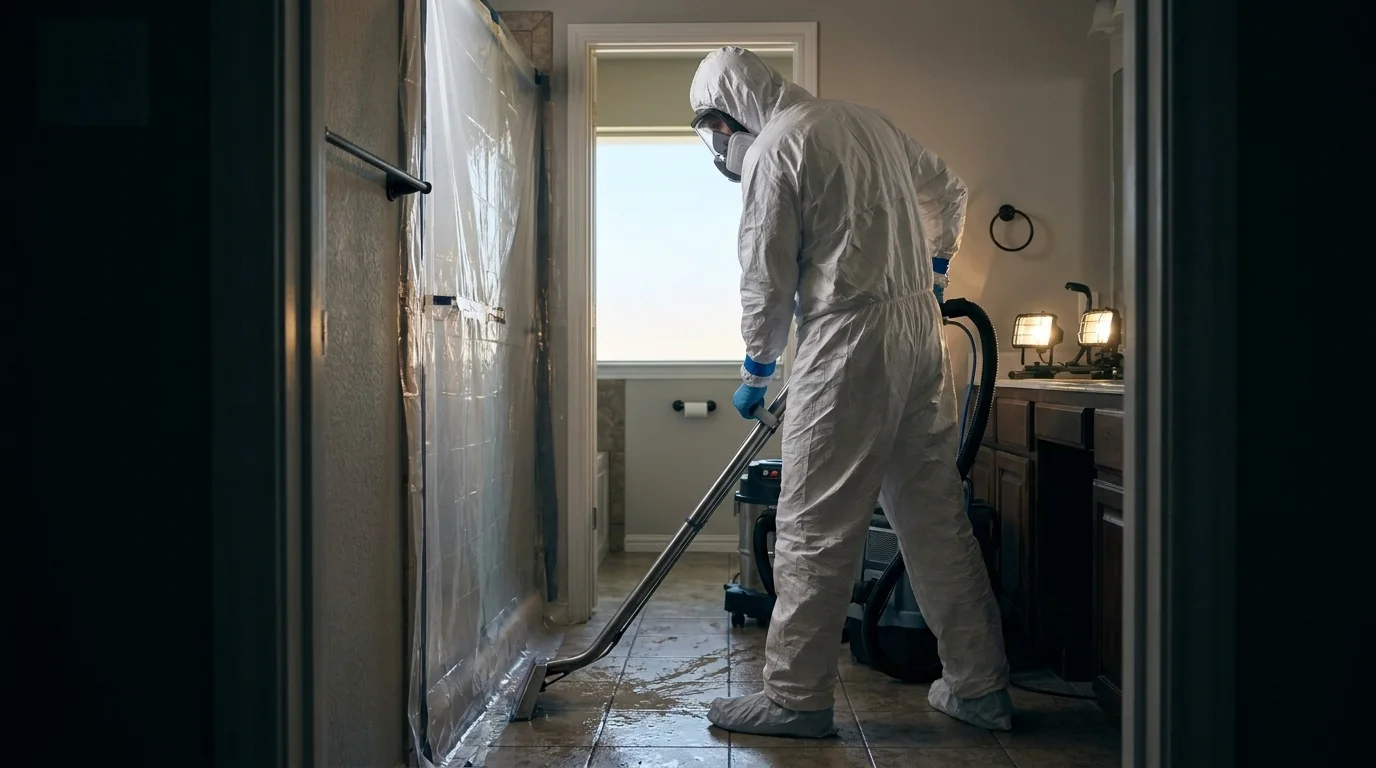
24/7 Emergency Sewage Cleanup and Sanitization in Royse City
24/7 emergency sewage cleanup and sanitization in Royse City and surrounding areas. IICRC-certified, insurance billing accepted. Call (214) 304-0621.
Raw sewage backing up through a drain, toilet, or floor drain in Royse City? Call Reign Restoration now at (214) 304-0621. We answer 24/7, and every hour that contaminated water sits on flooring or soaks into drywall raises the risk to your health and the cost of the repair.
A sewage backup is nothing like a clean water leak. Category 3 water, the IICRC’s classification for sewage and sewer line backups, carries bacteria, viruses, and parasites that can colonize porous building materials within hours. Carpet, carpet pad, drywall below the waterline, and particleboard cabinetry that have been in contact with sewage are generally not salvageable. Anything else in the affected area has to be cleaned, disinfected, and verified before it’s considered safe to use again.
What sewage cleanup and sanitization actually involves
Sewage cleanup starts with identifying the source: a sewer line blockage, a septic tank overflow, a failed sump pump, or a municipal backup pushing water up through floor drains. Royse City sits on a mix of older line infrastructure and newer subdivisions on clay-heavy soil, and both tree root intrusion into older sewer laterals and soil movement around newer lines are common culprits. Once the source is identified (and, if it’s a plumbing or municipal issue, flagged for the appropriate repair), the physical work begins: removing standing sewage, extracting saturated porous materials, and disinfecting every surface the water touched. Equipment includes trash pumps or wet vacs rated for solids, PPE for technicians, EPA-registered antimicrobial and disinfectant products, and air scrubbers to manage airborne contaminants during the work. Most residential sewage jobs run from a single bathroom backup (a day or two of work) to a whole-floor event from a main line backup, which can take several days once you account for demolition, disinfection, and drying.
Our process
- Source and contamination assessment. We identify where the sewage entered, the category and class of water, and how far it traveled under flooring and behind walls.
- PPE staging and containment. Technicians suit up and the affected area is contained to keep contamination from spreading to unaffected rooms through HVAC or foot traffic.
- Raw sewage removal and demolition. Standing sewage is extracted, and any porous material that absorbed Category 3 water, carpet, pad, baseboards, affected drywall, is removed and bagged for disposal per waste handling guidelines.
- Disinfection and antimicrobial application. Remaining structural surfaces are cleaned and treated with EPA-registered disinfectants, following the IICRC S500 standard for Category 3 water losses.
- Drying, monitoring, and sanitization verification. Structural drying equipment runs until moisture readings confirm the space is dry, and surfaces are checked before anything is reconstructed or the area is cleared for use.
What separates a good sewage cleanup response from a bad one
The most common mistake is under-scoping the demolition. Sewage wicks upward into drywall and insulation well above the visible waterline, and a crew that only cuts drywall to the waterline leaves contaminated material behind the finished wall. The same applies to subfloor: sewage that reaches under tile or hardwood through seams and grout lines can sit there undetected if the flooring isn’t pulled or probed with a moisture meter.
Another gap is treating sewage cleanup like a standard water loss and skipping antimicrobial application altogether, or applying it without the contact time needed for it to work. Adjusters reviewing sewage claims typically look for documented moisture readings before and after drying, photos of the contamination extent before demolition, and a clear waste disposal record for anything removed. Thorough documentation at each step is what supports a clean claim and protects you if a dispute comes up later.
What does sewage cleanup and sanitization cost?
Costs vary with the source of the backup, how far the water traveled, and how much demolition is needed to reach all contaminated material. These are typical industry ranges, not a quote: every sewage loss is different, and Reign Restoration provides a written scope of work before any cleanup begins. Homeowners insurance often covers sudden sewer backups under a sewer backup rider or endorsement, though coverage and limits vary by policy, so it’s worth checking your specific terms.
| Scenario | Typical range |
|---|---|
| Single bathroom, toilet overflow | $500 - $2,000 |
| One room, sewer line backup through floor drain | $1,500 - $4,500 |
| Multi-room backup with carpet and drywall removal | $4,000 - $10,000 |
| Septic overflow affecting a finished basement or lower level | $6,000 - $15,000 |
| Whole-floor sewage event with structural demolition | $10,000 - $25,000+ |
Seasonal & regional considerations
Heavy spring and early summer rain across Rockwall and Hunt County can saturate soil around aging sewer laterals and septic drain fields, increasing backups from both infiltration and overloaded systems. Clay soil common in the area also shifts with moisture swings, which puts stress on older sewer lines and can cause breaks that lead to repeated backups if the line itself isn’t repaired alongside the cleanup.
Service area
Reign Restoration handles sewage cleanup and sanitization in Royse City and surrounding communities including Rockwall, Fate, Greenville, and Caddo Mills.
If sewage is standing in your home right now, don’t wait on it to look for a drain snake. Call (214) 304-0621 and we’ll walk you through what to avoid touching while we get a crew en route to begin containment and removal.
Frequently Asked Questions
Does homeowners insurance cover sewage backup cleanup?
Is it safe to stay in the house during a sewage cleanup?
Why does sewage-contaminated carpet always have to be thrown out?
How do you know if sewage reached behind the walls or under the flooring?
What's the difference between a sewer line backup and a septic overflow?
Looking for the best sewage-cleanup company in Royse City?
Reign Restoration provides licensed and insured sewage-cleanup in Royse City, TX and the surrounding area. Customers rate us 5.0 out of 5 stars across 27 Google reviews. We answer calls 24/7 — call (214) 304-0621 for immediate help.
Need sewage-cleanup now?
We respond 24/7 across Royse City and surrounding TX cities.
Related Coverage
- Our Restoration Services
- Contact Reign Restoration
- Restoration Services in Allen
- Restoration Services in Caddo Mills
- Restoration Services in Dallas
- Restoration Services in Farmersville
- Restoration Services in Fate
- Restoration Services in Frisco
- Restoration Services in Garland
- Restoration Services in Greenville
- Restoration Services in Heath
- Restoration Services in Highland Park
- Restoration Services in Josephine
- Restoration Services in Lavon