
Odor Removal and Deodorization in Dallas
24/7 odor removal and deodorization in Dallas, TX. IICRC-certified, insurance billing accepted. Call (214) 304-0621.
Our IICRC-certified technicians are dispatched from our Royse City, TX headquarters and are typically on-site in Dallas within 60 minutes of your call.
Dallas humidity does something specific to trapped odors that drier climates don’t see: once summer dew points climb, smoke residue, pet dander, and cooking grease bond to porous surfaces and keep off-gassing for months instead of fading on their own. Whether it’s a kitchen fire in a Lakewood Tudor or a persistent pet odor in an Uptown high-rise unit, odor removal and deodorization work in Dallas has to account for how heat and moisture reactivate smells that a quick air freshener or ceiling fan simply can’t resolve.
Why Dallas Properties See Odor Problems That Linger
The housing stock split by the Austin Chalk escarpment creates two very different odor patterns across the city. In Lakewood, the M Streets, and along Swiss Avenue, 1920s and 30s Tudors sit on pier-and-beam foundations with original cast-iron drains, and that crawlspace air exchanges with the house more than homeowners expect. Sewer gas, mildew, and smoke particulate settle into the subfloor and old plaster and keep releasing odor compounds long after the source is gone. Out in Lake Highlands, where slab-built 1960s ranches dominate, the problem shifts: odors get sealed into HVAC ductwork and carpet pad instead, so a single kitchen fire or water intrusion can push smoke or musty smell through every room the system serves. Uptown’s high-rise condos add a third variable: shared HVAC risers mean an odor source in one unit can migrate to a neighbor’s space, which brings building management and HOA rules into the picture fast.
Our Odor Removal and Deodorization Process in Dallas
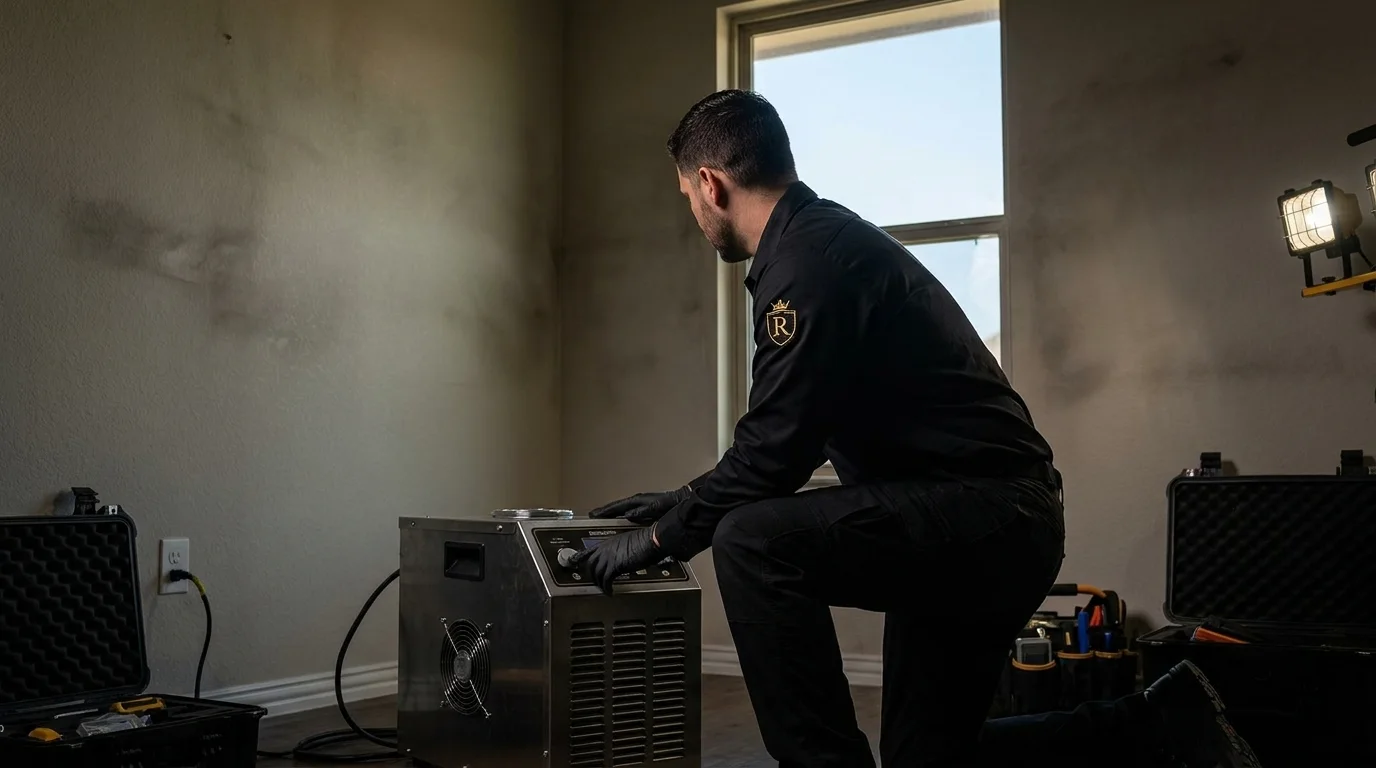
We start by identifying whether the odor is surface-level or has worked into the building assembly itself, which matters more here than in newer-construction cities because of how much pre-1950 lath, plaster, and original woodwork is still in service east of White Rock Lake. After source removal, cleaning, and HEPA vacuuming, we select a deodorization method based on the structure and how occupied it is. Hydroxyl generators handle occupied homes and condos because they don’t require evacuation and work slowly but safely through porous material. Ozone treatment gets reserved for vacant properties or unoccupied periods, since it’s more aggressive at breaking down smoke and protein-based odors but needs the space cleared and sealed during treatment. Thermal fogging, which mimics how smoke originally penetrated a space using a heated deodorizing fog, is often the final step on fire-related jobs where odor has worked into closets, cabinetry, and HVAC chases.
Equipment & Methods We Use for Odor Removal
Which equipment we bring depends on what’s actually causing the smell. Pet urine and sewage odors in older pier-and-beam homes usually call for enzymatic treatment combined with hydroxyl generators run over several days, since the crawlspace keeps reintroducing moisture that feeds bacterial odor. Fire and smoke odor, which falls under the same technical standard our crew trains on as IICRC-certified technicians, typically needs thermal fogging paired with HVAC duct cleaning so the deodorizer reaches the same paths the smoke traveled. For HOA buildings in Uptown or Preston Hollow where shared ventilation is a factor, we document air handling isolation before treatment starts, since the building’s property management often wants to see containment measures before approving work in a shared riser.
Local note
One detail that catches homeowners off guard in Oak Cliff and the Bishop Arts District: the rolling terrain there means basements and partial crawlspaces sit at different grades than the flat Blackland clay soil east of the Trinity, so moisture intrusion and the musty odor that follows it behaves differently house to house even on the same block. We check grade and drainage pattern before treating a musty odor complaint in that part of town, because deodorizing without addressing a slow moisture source just means the smell comes back in a few weeks.
If a smoke smell, pet odor, or musty closet has outlasted your own cleaning efforts, it usually means the source has worked past what surface cleaning can reach. Reign Restoration’s IICRC-certified crew works odor removal and deodorization jobs across Dallas, from Lakewood bungalows to Uptown condos, and we’re reachable around the clock at (214) 304-0621 to get a treatment plan started.
Serving Dallas from our Royse City headquarters — ★ 5.0 · 27 Google reviews
“I can’t say enough good things about Reign Restoration. Every project they have worked on has been completed with outstanding quality. They are professional, reliable, and take pride in their work. Communication is always clear, and they go the extra mile to make sure everything is done right the…” — Marlin, August 2025Read our reviews on Google →
Odor Removal and Deodorization in Dallas: Service Coverage
Frequently Asked Questions
How fast can you arrive for odor removal and deodorization in Dallas?
Does the pier-and-beam construction common in Lakewood and the M Streets make odor removal more complicated?
Can you treat odor in an Uptown high-rise condo without disturbing neighboring units?
What's the difference between ozone treatment and hydroxyl deodorization, and which do you use in occupied Dallas homes?
Are homes near White Rock Lake more prone to musty or mildew odor?
Will my insurance cover odor removal after a Dallas-area kitchen or grease fire?
Odor Removal and Deodorization response in Dallas
Most Dallas calls see a technician on-site within 60 minutes from our Royse City headquarters.