
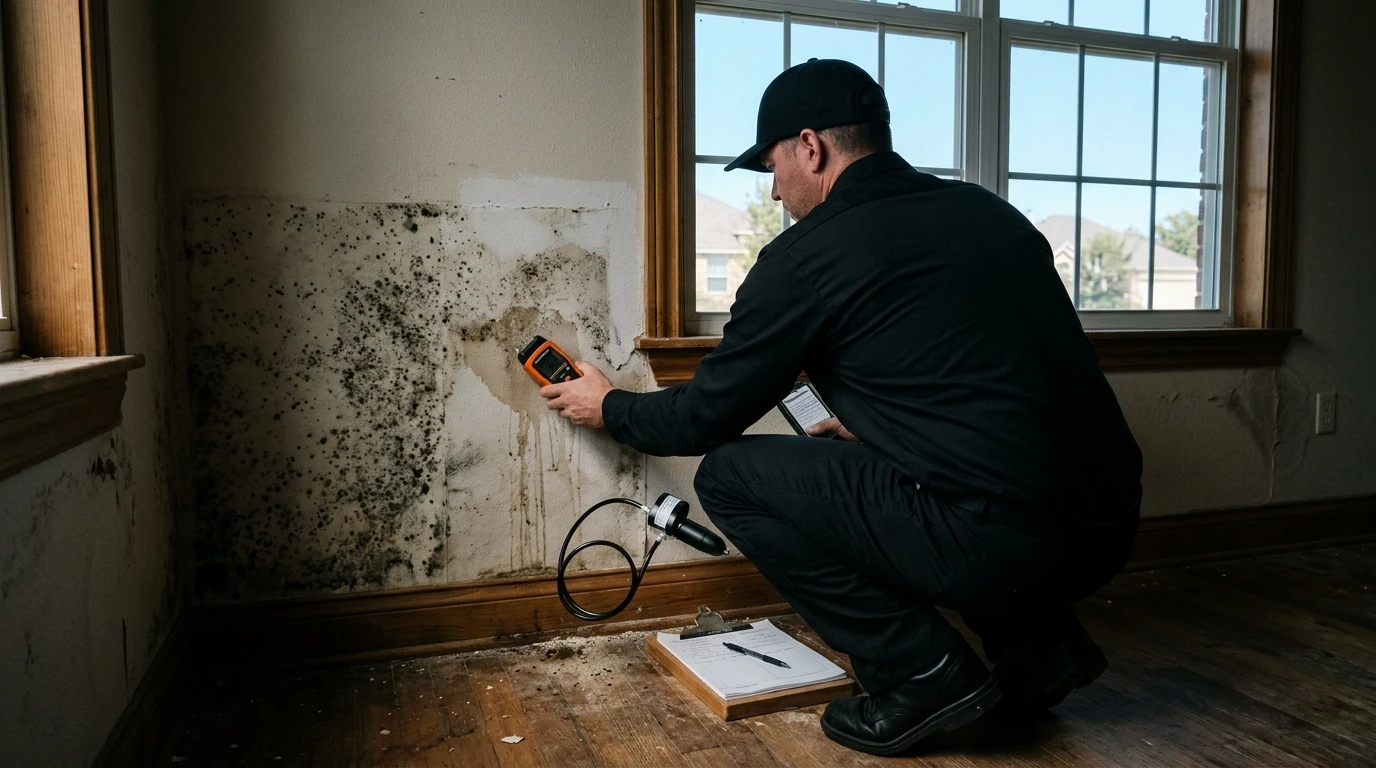
TL;DR: In Royse City, call a licensed mold assessor first if the affected area is larger than 25 contiguous square feet. The assessor writes a remediation protocol, then a separately licensed remediation contractor, such as Reign Restoration, does the physical cleanup. Texas law bars one company from doing both jobs on the same project. If an active leak caused the mold, get the water stopped first.
If you just pulled back a baseboard in a Royse City home and found fuzzy black or green growth, your first call depends on one thing: how big is it? For anything over 25 contiguous square feet, Reign Restoration can be reached at (214) 304-0621, 24/7, and holds the IICRC AMRT mold remediation credential and a Texas mold remediation license (MRC2276). But Texas has a rule most homeowners don’t know about until they’re mid-project, and getting the order wrong can mean redoing paperwork or losing an insurance claim.
Who Do You Call First When You Find Mold?
For a small, contained spot (under 25 contiguous square feet, and you own and occupy the home without filing an insurance claim), you can usually call a remediation contractor directly. For anything larger, Texas requires an independent, licensed mold assessor to inspect the property and write a remediation protocol before any remediation work starts.
That protocol spells out the scope: which materials come out, where containment goes, what clearance testing looks like when the job is done. The assessor is not the company that does the removal work. Texas Department of Licensing and Regulation enforces this as a conflict-of-interest rule: the same business cannot both write the protocol and perform the remediation on one job.
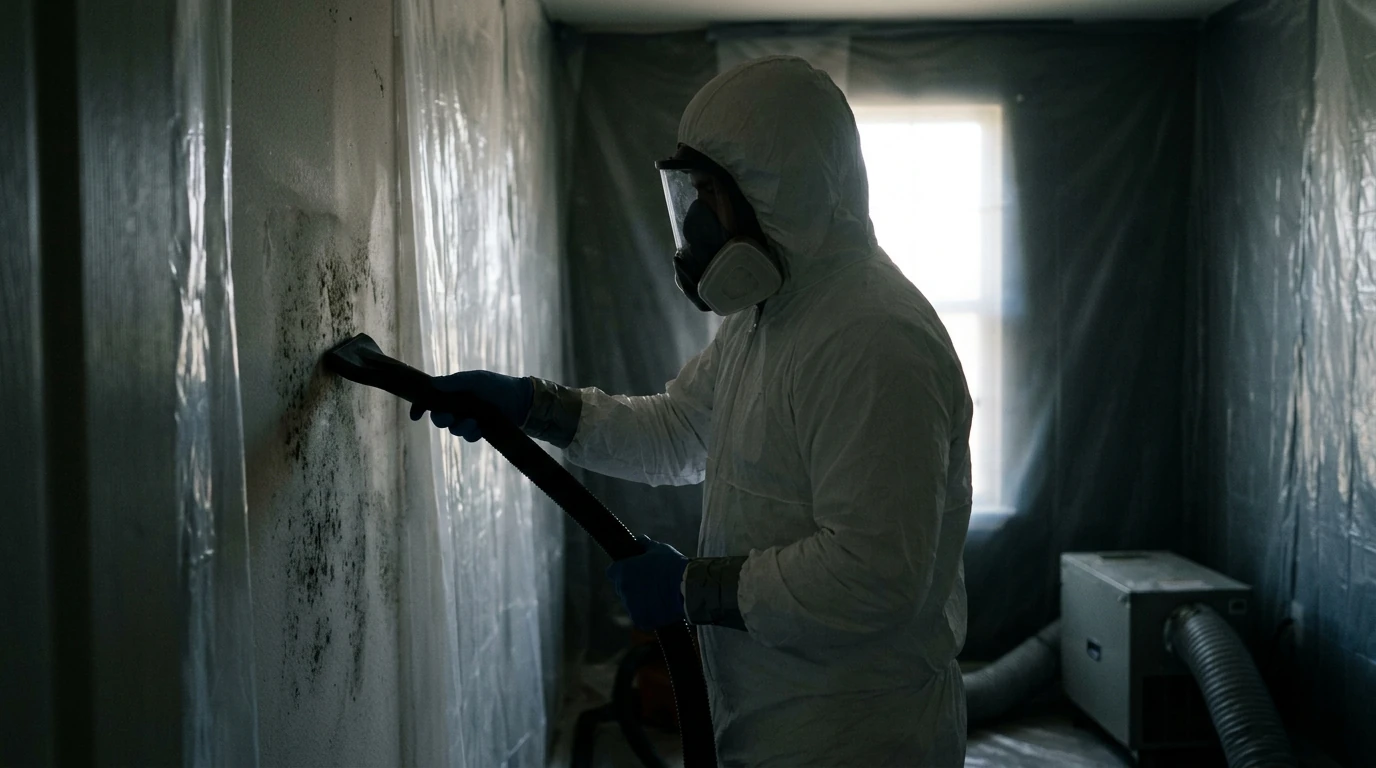
Once the protocol exists, you bring in a licensed remediation contractor to execute it. Reign Restoration performs that remediation work under IICRC’s S520 mold remediation standard, which governs containment, negative air pressure, and post-remediation verification.
Do You Need a Mold Test Before Remediation?
You need an independent assessment, not necessarily a DIY test kit, once the affected area is larger than 25 contiguous square feet in Texas. A mail-in swab kit can confirm mold is present, but it cannot satisfy the state’s licensing requirement for a written protocol on a job that size.
For smaller spots, or just to understand what you’re looking at before deciding anything, our guide on how to test for mold walks through DIY kits versus a professional inspection. And before you panic over the color, black mold vs. regular mold covers why visible color alone doesn’t tell you much about risk; lab identification does.
If the area is borderline, a licensed assessor’s visit resolves the question. Reign Restoration also offers mold inspection and testing to get you a clear answer on scope before anyone commits to a remediation plan.
Mold After Water Damage: Who Do You Call in Royse City?
If mold showed up after a leak, pipe failure, or flooding, stop the water source before anything else. Mold can begin growing within 24 to 48 hours on wet drywall, insulation, and framing, so every day the source stays active, the remediation scope grows.
If the leak is still running, that’s a plumber or, for a roof source, a roofer, not a mold company. Once the water is off and drying can start, water damage restoration and mold remediation often run as one coordinated job rather than two separate calls. Our post on who to call for water damage restoration in Royse City covers that first step in more detail, and water damage restoration and mold remediation are handled as a single scope when the cause and the growth are connected.
Should You Call Your Insurance Company About Mold?
Call your insurer after the source of water is addressed and you have documentation, not before you know what you’re dealing with. Most homeowners policies only cover mold that results directly from a sudden, covered loss, such as a burst pipe, and many policies cap mold-related payouts even then. The Texas Department of Insurance spells out when water damage and mold are actually covered, and gradual leaks or long-term moisture problems are typically excluded regardless of the mold itself.
Photograph the growth, the water source, and any affected materials before remediation begins. That documentation is what protects a claim if coverage applies.
What Happens When You Call
The first call is a short conversation: where the growth is, roughly how large, and whether there’s an active water source. If the area is small and clearly contained, scheduling moves straight to remediation. If it’s larger, or the scope is unclear, an assessment gets scheduled first, since Texas law requires that independent step before work can legally begin.
On site, the crew sets up containment with negative air pressure to keep spores from spreading to the rest of the home, removes materials that can’t be cleaned, and runs HEPA filtration through the job. When the protocol calls for post-remediation clearance testing, that’s done by the independent assessor, not the remediation crew, to confirm the space is clean.
If your mold problem in Royse City is larger than a small, contained spot, start with an assessment, then bring in the remediation contractor to execute that plan. Call Reign Restoration at (214) 304-0621 to talk through which step applies to your situation, or request an estimate once you know the scope.