
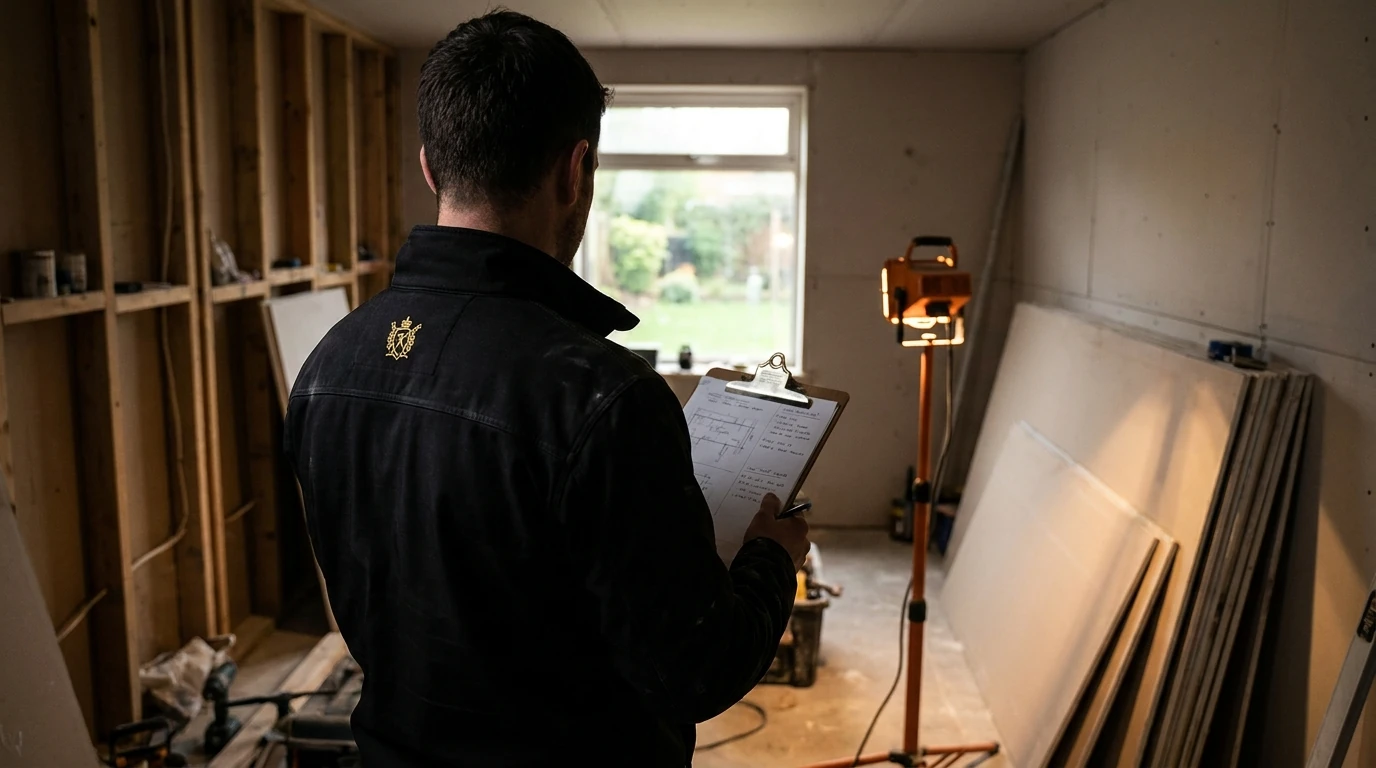
Some water damage jobs wrap up in a week: extract, dry, replace a few boards of drywall, done. Others are a different animal entirely. When a loss is bad enough to gut rooms down to the studs, the job stops being a restoration job and becomes a rebuild, with a general contractor coordinating a whole rotation of trades over months, not days. That’s the situation one homeowner, Walter, was in when his home suffered major water damage.
Here’s what he said afterward:
“Jerrott was very attentive to our needs during the 10 months that it took to rebuild after major water damage to our home. His subs were good and he actively supervised their work. We’d recommend Reign without any reservations to anyone.”
, Walter, verified Google review
That review packs a lot into three sentences. Below is what each part actually means for anyone facing a rebuild of similar scale.
Why a water damage rebuild can take 10 months, not 10 days
A rebuild timeline this long almost always means the damage went past drying and into full reconstruction. Extraction and structural drying, the part most people picture when they hear “water damage,” is typically the shortest phase of a job like this, often wrapped inside the first one to two weeks.
What takes the remaining months is everything that comes after: demolition of anything that couldn’t be dried and saved (drywall, insulation, sometimes subfloor or framing), then a full sequence of rebuild trades: framing repairs, electrical and plumbing rough-in where walls were opened, insulation, drywall, texture and paint, trim, flooring, and fixtures. Each trade has to finish, get inspected where required, and clear out before the next one starts. On a whole-home loss, that sequencing is where the months go, not the drying.
What it means when subs get “actively supervised”
Active supervision means the general contractor, not the homeowner, is the one catching problems before they get buried behind drywall. On a multi-trade rebuild, the general contractor is the person walking the site between trades, checking that framing is square before drywall goes up, that plumbing and electrical rough-in pass inspection before insulation covers it, and that each sub’s work meets code and matches the agreed scope before the next crew starts.
Without that oversight, problems compound. A framing issue that goes unnoticed becomes a drywall crew’s problem, then a flooring crew’s problem, and by the time it surfaces it’s expensive to unwind. This is also the core reason a company that handles both water damage restoration and general contracting under one roof matters on a job this size: there’s a single point of accountability across drying, demo, and rebuild, instead of a homeowner managing a handoff between separate companies who each blame the other when something doesn’t line up.
Why attentiveness matters more on long timelines
A project that runs 10 months has a lot of places to lose momentum, and a lot of moments where a homeowner is left wondering what’s actually happening in their own house. Attentiveness on a job that long usually looks unglamorous: returned calls, a walkthrough before a trade starts so there are no surprises, and someone flagging a delay before the homeowner has to ask why nothing’s happened this week.
It also matters for the insurance side. A rebuild this size is typically working off a scope of repairs the insurer approved, and any change (a hidden issue found once demo starts, a material substitution, a code-required upgrade) needs to be documented and communicated so it doesn’t become a fight over the invoice later. Homeowners in the middle of a claim like this may also want to see what to do in the first 24 hours after water damage and how homeowners insurance actually covers water damage, since the documentation habits that matter on day one are the same ones that protect a claim ten months later.
What to expect if you’re facing a rebuild like this
Expect a scope walkthrough before any demo starts, a written sequence of trades, and regular check-ins rather than radio silence between visits. A company managing both the restoration and the rebuild should be able to tell you, at any point, exactly what phase the job is in and what’s next.
If your home has major water damage that’s gone past a simple dry-out and into structural repair or a full rebuild, that’s the point to get a general contractor involved who also understands restoration, not just a demo crew and a separate builder working from two different scopes. Reign Restoration is an IICRC Certified Firm (license MRC2276) serving Royse City and the surrounding North Texas area, and handles both the mitigation and the reconstruction side of jobs like Walter’s under one contract.
If you’re staring down a loss that looks like it’s headed for months of rebuild rather than a quick dry-out, get a written scope before demo starts, not after.