
TL;DR: A ceiling stain is a symptom, not the problem. The color, shape, and whether the drywall is soft or sagging tell you how serious it is. A dry, rust-colored ring with firm drywall is usually old and stable. A spreading gray stain with soft or bubbling drywall means active moisture. A bulging ceiling is a safety emergency, do not touch it. Find the water source first, then assess the ceiling. If the drywall is saturated, sagging, or more than a few square feet are affected, it needs to come out.
You noticed it this morning: a brown oval on the ceiling, maybe with a darker ring around the edge. Or the paint is bubbling. Or there is a soft spot you can press with your finger. The ceiling is telling you something, but what, exactly, depends on what you are looking at. This guide walks through the three things you can assess from the floor, how to find the source, and the clear line between a DIY patch job and a call to a restoration crew.
What does the color of a ceiling stain actually mean?
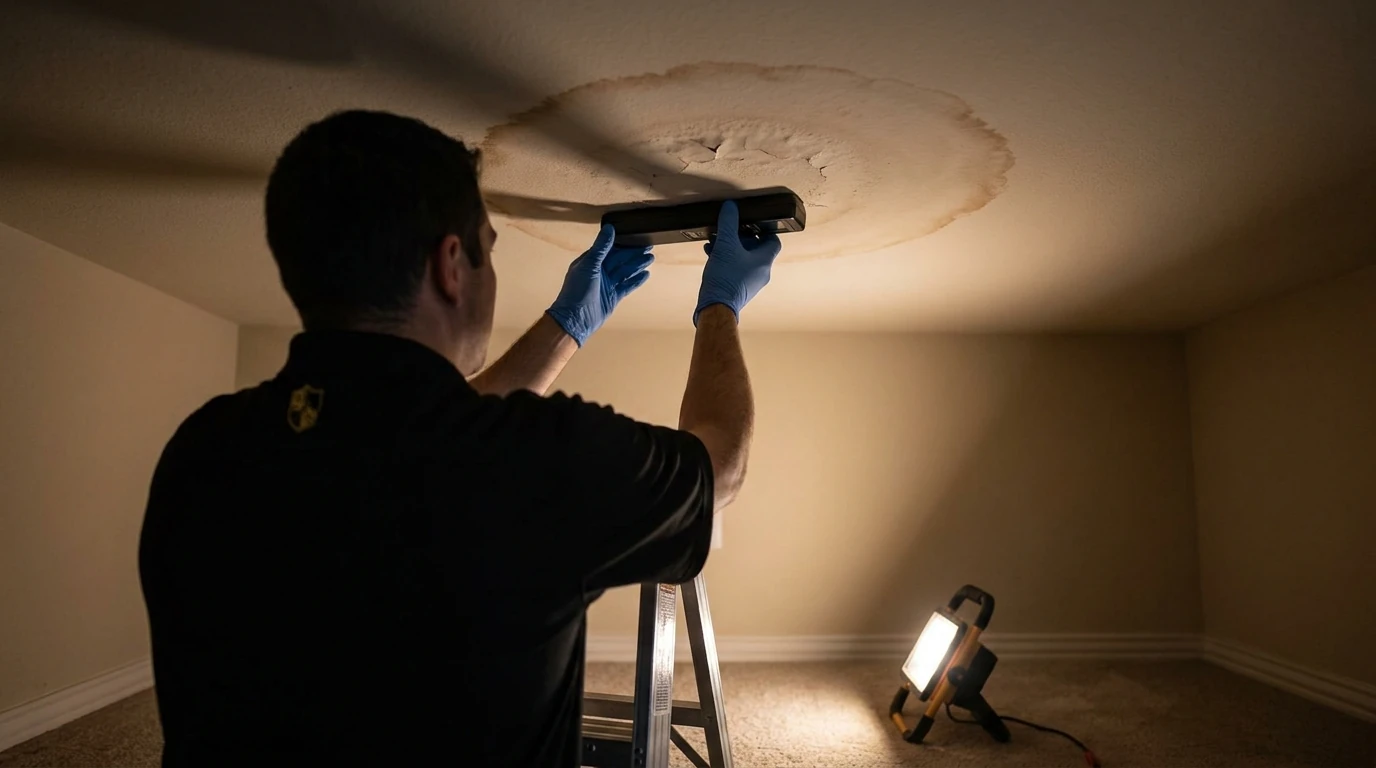
The color of a ceiling stain is the fastest first clue about what caused it and how long it has been there. A yellow or light tan ring with a darker brown border is the classic old-water mark: water soaked in, dried, and left behind mineral deposits and tannins from the drywall paper. That ring shape forms because water evaporates from the center outward, concentrating the residue at the edge.
A gray or dark stain that spreads without a clean border usually means the moisture is still active or was recent. Gray tones can also indicate mold beginning to colonize the wet paper facing on the drywall. If you see black speckling inside or around a stain, that is a strong signal that mold growth has already started. The EPA’s guidance on mold cleanup is clear: drywall with mold growth on more than a small area should be removed, not dried in place.
Copper or rust-colored staining often points to a corroding pipe above, a slow drip that has been going on longer than you realized. Green or blue-green tinting near a stain can mean a copper supply line with a pinhole leak. White chalky deposits without discoloration are usually condensation from a cold surface, like an uninsulated pipe sweating in summer.
How do spread and texture tell you whether the damage is active?
The shape and feel of the stain matter as much as the color. A stain with a sharp, dry, hard edge and firm drywall underneath is almost certainly old and dry. The water event is over. The ceiling may still need repair and the source still needs to be confirmed, but there is no active moisture emergency.
A stain that is growing, you can see it is larger than it was yesterday, means water is still moving through the assembly. Press gently around the stain with one finger. Firm drywall is a good sign. Soft, spongy, or crumbly drywall means the gypsum core has absorbed water and is losing structural integrity. Paint that is bubbling or peeling away from the surface is another sign of active or recent saturation.
Popcorn ceilings deserve a specific note. The acoustic texture on older popcorn ceilings can absorb and hold moisture longer than smooth drywall, which means the stain you see on the surface may understate how wet the material actually is. Popcorn ceilings installed before 1978 may also contain asbestos, do not sand, scrape, or disturb them without a professional assessment first.
Ceiling tiles in drop ceilings are a different material. Mineral fiber tiles absorb water quickly and will show staining and sagging long before the structure above them is seriously compromised. A stained tile is a useful early warning, but it does not tell you how much water is sitting in the plenum above it.
When is a bulging or sagging ceiling a safety emergency?
A ceiling that is visibly sagging or has a dome-shaped bulge is holding standing water above it, and it can fail without warning. Do not poke it, press it, or try to drain it yourself by punching a hole. The weight of water in a saturated ceiling section can be hundreds of pounds, and a sudden collapse can cause serious injury.
If you see a bulge, do this: move furniture and people out from under it, turn off any electrical circuits that run through that area (water and live wiring are a serious hazard), and call a restoration crew immediately. This is the one scenario where you skip the triage steps and go straight to professional help. IICRC-certified water damage technicians are trained to drain and stabilize a saturated ceiling safely before any demolition begins.
A ceiling that is sagging along a seam or at a joint, not a dome bulge, but a gradual bow, is less immediately dangerous but still means significant water has been absorbed. That drywall needs to come down.
Where does ceiling water damage usually come from?
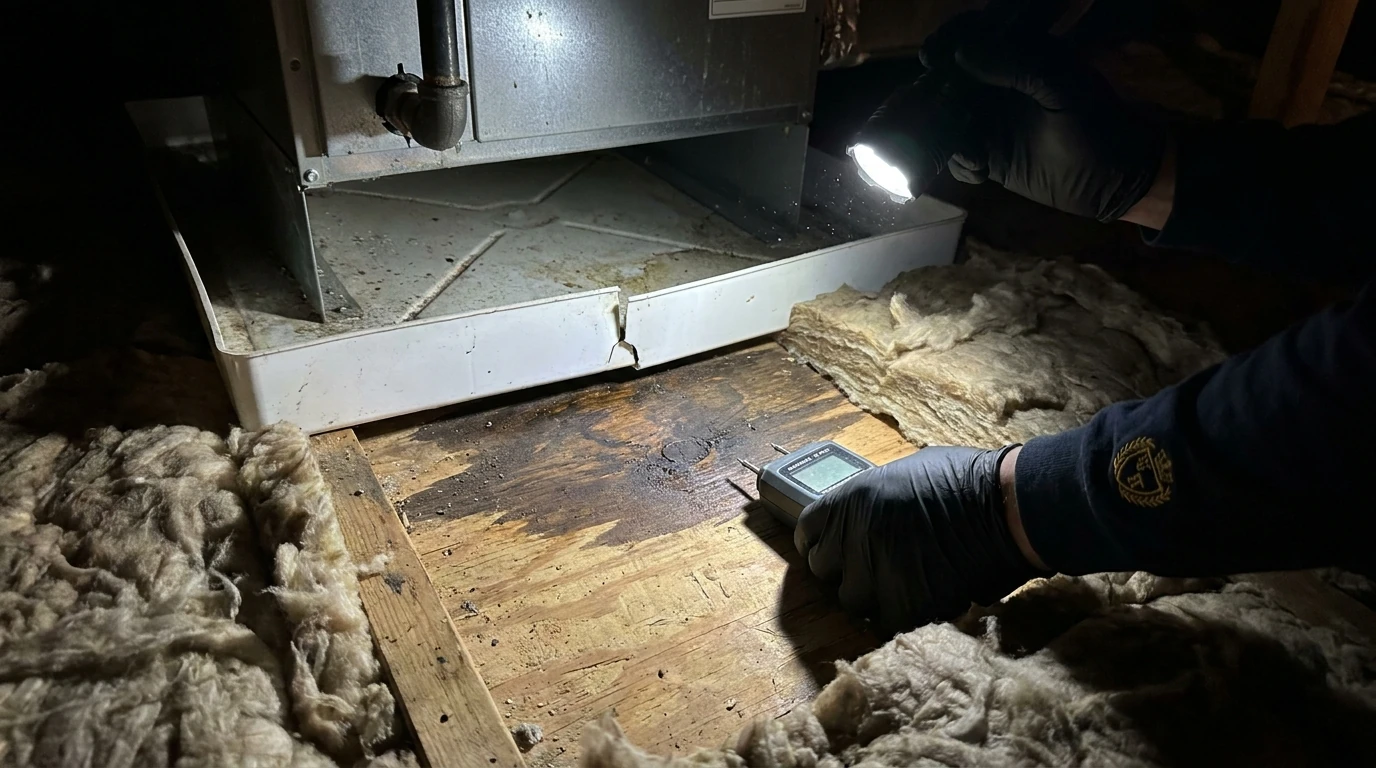
The source determines the repair path. In slab-on-grade homes in Royse City, Rockwall, and Fate, the most common cause of a ceiling stain is not a burst supply line, it is a hail-punctured roof or a failed condensate pan under the attic air handler. These are slab houses with the AC unit sitting directly over finished living space, so a cracked or overflowing drain pan drips straight onto the ceiling below. After a hail event, check the roof decking and flashing before assuming the AC is the culprit, both can fail at the same time.
In older Dallas neighborhoods like Lakewood and the M Streets, the picture is different. Those 1920s and 1930s pier-and-beam homes carry original cast-iron drain stacks that are now a century old. A ceiling stain in one of those houses more often traces back to a cracked or corroded stack joint than to a roof leak, especially if the stain is below a bathroom. The cast iron does not fail all at once, it seeps for months before the ceiling shows it.
Other common sources, regardless of house type:
- HVAC condensate lines, clogged drain lines are the single most common cause of ceiling stains in Texas homes with attic air handlers. A simple pan tablet can prevent it; a failed float switch can cause thousands in damage.
- Roof flashing failures, around chimneys, skylights, and plumbing vents, flashing degrades faster than the shingles themselves.
- Upstairs bathroom supply or drain lines, a slow drip from a wax ring, a supply line fitting, or a tub overflow can run inside the wall cavity for weeks before it shows on the ceiling below.
- Ice dam backup, less common in North Texas but possible during hard freezes: ice at the eave traps meltwater that backs under the shingles.
For storm-related roof damage, the storm damage restoration process starts with emergency tarping to stop the water intrusion before any interior work begins.
How do you know whether the ceiling drywall has to come out?
Not every ceiling stain requires demolition. Here is the honest breakdown:
You can likely patch and repaint if:
- The stain is small (under one square foot), dry, and the drywall is firm
- The source has been confirmed and fully repaired
- There is no soft spot, no bubbling paint, and no musty odor
- The stain has been stable for at least two weeks after the source was fixed
The drywall needs to come out if:
- The drywall is soft, crumbling, or sagging anywhere
- The stain covers more than a few square feet
- There is any visible mold growth or a persistent musty smell
- The moisture reading with a pin or pinless meter is above 16 percent (the IICRC S500 threshold for acceptable drywall moisture)
- The insulation above the drywall is wet, wet insulation holds moisture against the back of the drywall for weeks and almost always leads to mold
Wet insulation is the part most homeowners miss. You can dry the surface of a ceiling with fans and assume the problem is solved, but if the batt insulation above it is saturated, you have created a hidden mold incubator. A moisture meter reading through the drywall will not catch this, the insulation has to be physically inspected.
If you have any doubt, a professional moisture assessment with a thermal camera can map the wet zone without opening the ceiling unnecessarily. That assessment also creates the documentation your insurance adjuster will want. For a full picture of what a water damage claim typically covers, the homeowners insurance and water damage guide on this site walks through what policies pay and what they exclude.
What should you do right now?
If the stain is dry, small, and the source is confirmed fixed, monitor it for two weeks and patch when you are sure it is stable. If the stain is active, growing, or the drywall is soft, stop using fans to try to dry it yourself, surface drying without addressing the structure behind it is how mold problems start.
For anything involving a sagging ceiling, a stain larger than a dinner plate with soft drywall, visible mold, or a source you cannot identify, the right move is a professional moisture assessment. The water damage restoration process starts with finding every wet area, not just the visible stain, and drying the structure to the IICRC S500 standard before any repairs go in. Patching over wet drywall is money wasted.
If mold is already visible, that is a separate remediation scope. The mold remediation process involves containment, HEPA filtration, and surface treatment, not just cutting out the stained section. For more on identifying what you are dealing with, the signs of hidden mold guide covers what to look for beyond the visible growth.
Rein Restoration is available 24/7 at (214) 304-0621 for ceiling water damage assessments in Royse City, Rockwall, Fate, and across the Dallas area. An IICRC-certified technician can confirm the moisture boundary, identify the source, and give you a written scope before any work starts.
About Reign Restoration
Reign Restoration is an IICRC Certified Firm serving Royse City, TX and the greater Dallas area (license MRC2276). Certified in Water Damage Restoration (WRT), Applied Microbial Remediation (AMRT), and Fire and Smoke Restoration (FSRT), the team handles water damage mitigation, mold remediation, storm damage response, fire damage restoration, and general contracting for residential and commercial properties. Available 24/7 at (214) 304-0621.
Video Transcript
That brown stain on your ceiling is trying to tell you something. The color, shape, and feel of it reveal exactly how serious the problem is. A yellow or tan stain with a dark brown ring? That’s the classic old-water mark. Water dried, left minerals behind, and the damage is likely stable. A gray stain spreading without a clean edge means moisture is still active. Black speckling inside the stain? That’s mold starting to grow. Press gently around the stain. Firm drywall means the water event may be over. Soft or crumbly drywall means the structure is already compromised. A dome-shaped bulge is a safety emergency. The ceiling is holding hundreds of pounds of water. Get everyone out from under it and call a professional immediately. Also cut power to any circuits in that area. Water and live wiring together are a serious hazard you don’t want to ignore. In North Texas slab homes, the most common culprit is a cracked AC condensate pan or hail-damaged roof — not a burst pipe. Always check both. In older Dallas homes, it’s often a century-old cast-iron drain stack. If the stain is below a bathroom, that’s where to start looking. Don’t guess when your ceiling is at stake. Call Reign Restoration at 214-304-0621 for a free estimate and let a certified crew find the source fast.